How many muscles are in the human body?
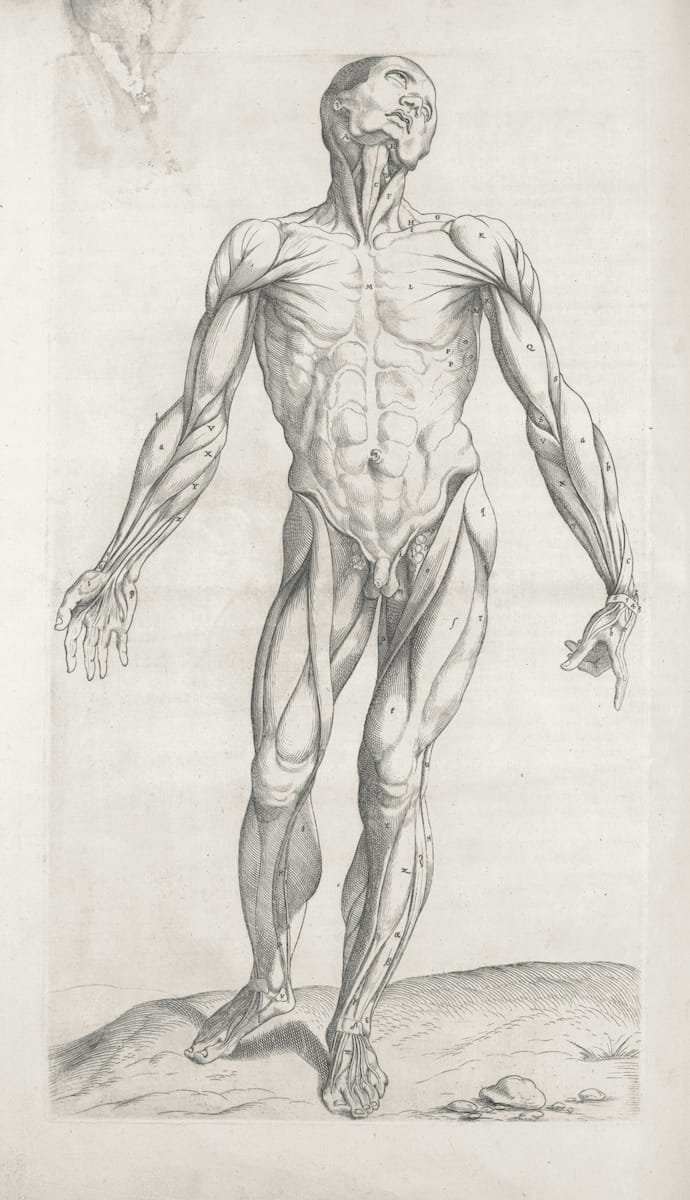
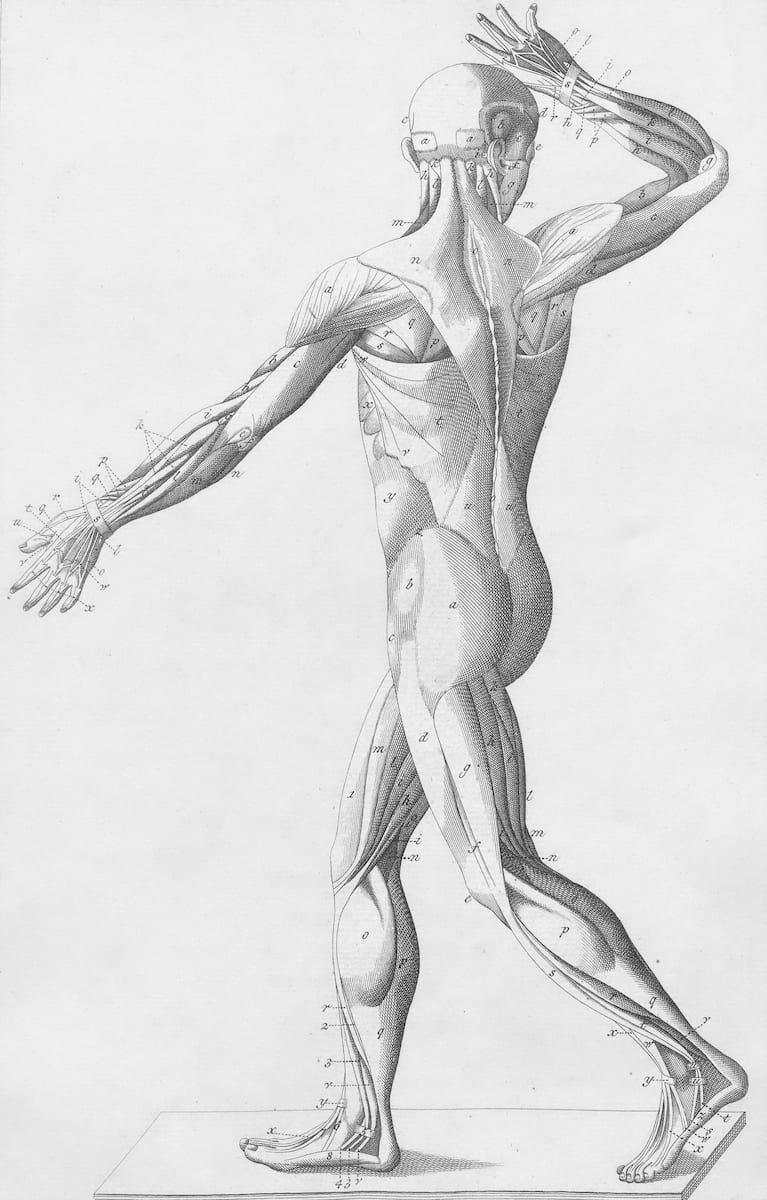
More than 600. That's the safe answer — but the precise number is one anatomy genuinely argues about, with figures running from about 600 all the way to 840.
Tour the body, region by region
Tap a region to meet its headline muscle and what it does.
The gluteus maximus is the largest muscle in the body by volume. It is the chief anti-gravity muscle, keeping your trunk upright and powering you up stairs and out of chairs.
Why there's no single number
Ask for the count and you'll be told 600, 639, 640, even 840 — all in apparent earnest. They're not contradicting each other so much as counting differently. Many muscles have several distinct heads or bellies, and anatomists disagree on whether those count as one muscle or several. Tally conservatively and you land near 600; split every segment and you climb toward 840.
What everyone agrees on is “more than 600,” and that this figure counts skeletal muscle only — the kind you consciously control. It excludes the smooth muscle lining your gut and blood vessels and the cardiac muscle of your heart, because those form continuous sheets rather than separate, nameable units.
Three kinds of muscle
Your “600-plus” are all one type. In total the body runs three: skeletal muscle (voluntary, striped, attached to bone by tendons — the biceps, abs and calves you can flex on command); smooth muscle (involuntary, in the walls of organs and blood vessels, quietly moving food and blood); and cardiac muscle (involuntary, found only in the heart, and uniquely tireless).
The major muscles, head to toe
The named muscles most people learn first, grouped by upper body, core and lower body — with where each sits and what it does.
The muscle record breakers
“Biggest” and “strongest” both depend on how you measure — so here are the title-holders, with the fine print.
The biggest muscle by volume, in the hip and buttock. By surface area, the latissimus dorsi of the back wins instead — "largest" depends on how you measure.
A thin ribbon running from the hip diagonally across the thigh to the inner knee, crossing two joints on the way.
Tucked in the middle ear at roughly 1–6 mm, it steadies the stapes (the smallest bone) and reflexively dampens loud sounds.
For its size, the jaw’s masseter wins — with the jaw muscles together it can bite down with up to about 90 kg (200 lb) of force on the molars.
Cardiac muscle never rests, beating roughly 100,000 times a day and pumping about 9,500 litres of blood — for your whole life.
Constantly micro-adjusting your gaze, the eye muscles fire thousands of times a day — closely rivalled by the ever-breathing diaphragm.
How muscles actually move you
Skeletal muscles can only pull, never push — so they work in antagonist pairs. To bend your elbow the biceps shortens while the triceps relaxes; to straighten it, they trade jobs. Almost every movement is two muscles cooperating like that, anchored to bone by tendons at each end.
The exception is your face. The muscles of expression attach to skin rather than bone, which is why a tiny contraction can lift an eyebrow or curl a lip — and why faces are so expressive.
Myth-busting
You’ll see this everywhere with wildly different numbers (17 vs 43, 26 vs 62, and so on). None traces to a solid anatomical source — the muscles involved overlap and are hard to count cleanly. Treat it as folklore, not fact.
The tongue is strong and tireless, but it is not a single muscle (it’s eight) and it doesn’t out-power the jaw or legs. Strongest-for-its-size goes to the masseter.
Muscle and fat are completely different tissues; one cannot become the other. When training stops, muscle fibres shrink and fat can accumulate separately if intake outpaces activity.
Skeletal muscle is the type you consciously control. Smooth muscle (in organs and blood vessels) and cardiac muscle (the heart) run automatically, without a single conscious command.
Flex your muscle knowledge
Roughly how many skeletal muscles does the human body have?
Keeping all 600-plus healthy
Muscle is “use it or lose it” tissue. The two habits with the strongest evidence behind them are simple: regular resistance or weight-bearing exercise, which signals muscle to maintain and rebuild itself, and enough protein spread across the day to supply the building blocks. Sleep and rest days matter too — muscle actually repairs and strengthens between sessions, not during them — as does staying hydrated, since muscle tissue is roughly three-quarters water.
General information only, not medical advice. For exercise or nutrition tailored to you — especially with any health condition or injury — talk to your GP, a physiotherapist or an accredited professional.
Frequently asked questions
Sources
- Library of Congress — Strongest muscle. The 650–840 range, the masseter's bite force, and the heart as hardest-working.
- Healthline — Largest muscle in the body. The largest, smallest, longest and most-active rankings.
- Kenhub — Muscle tissue. The three muscle types and how skeletal muscle attaches and contracts.
Explore more anatomy
Six hundred and something muscles, pulling in pairs — the exact total is the one thing your body never settles.